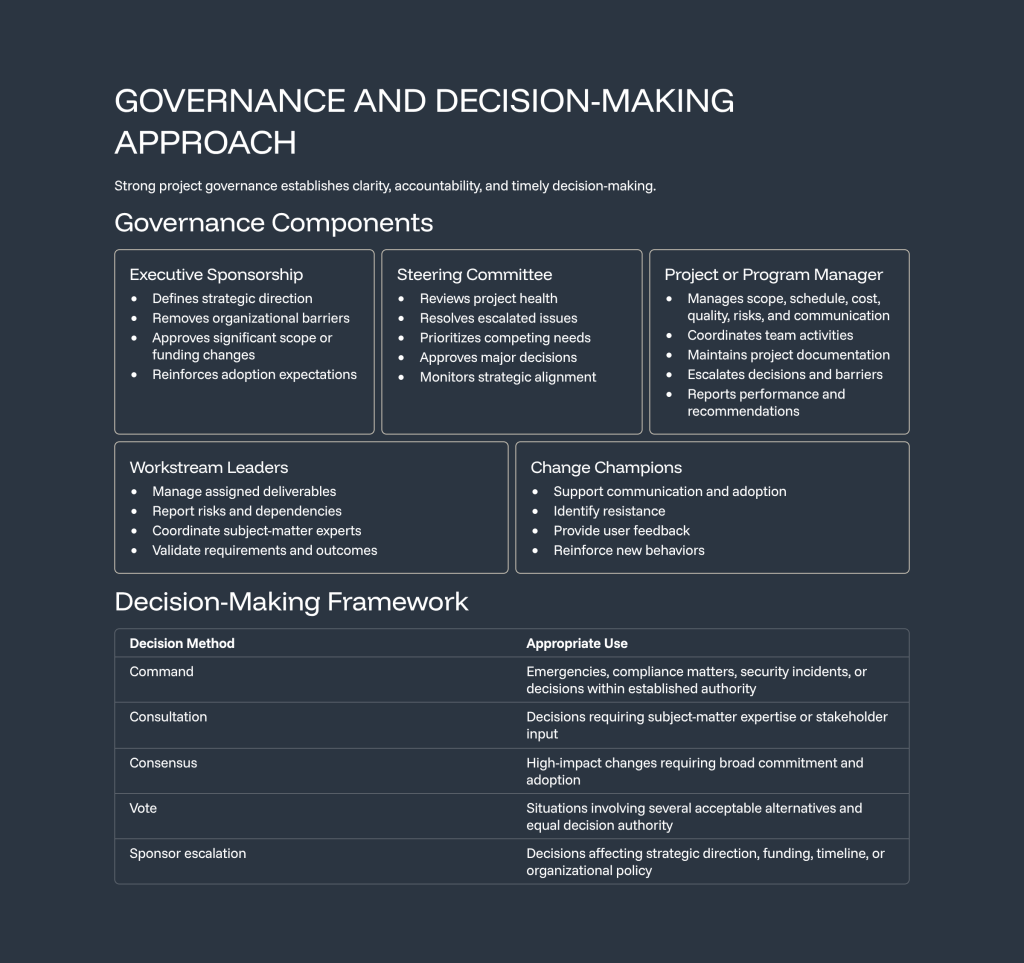
Strong project governance establishes clarity, accountability, and timely decision-making.
Governance Components
Executive Sponsorship
- Defines strategic direction
- Removes organizational barriers
- Approves significant scope or funding changes
- Reinforces adoption expectations
Steering Committee
- Reviews project health
- Resolves escalated issues
- Prioritizes competing needs
- Approves major decisions
- Monitors strategic alignment
Project or Program Manager
- Manages scope, schedule, cost, quality, risks, and communication
- Coordinates team activities
- Maintains project documentation
- Escalates decisions and barriers
- Reports performance and recommendations
Workstream Leaders
- Manage assigned deliverables
- Report risks and dependencies
- Coordinate subject-matter experts
- Validate requirements and outcomes
Change Champions
- Support communication and adoption
- Identify resistance
- Provide user feedback
- Reinforce new behaviors
Decision-Making Framework
| Decision Method | Appropriate Use |
| Command | Emergencies, compliance matters, security incidents, or decisions within established authority |
| Consultation | Decisions requiring subject-matter expertise or stakeholder input |
| Consensus | High-impact changes requiring broad commitment and adoption |
| Vote | Situations involving several acceptable alternatives and equal decision authority |
| Sponsor escalation | Decisions affecting strategic direction, funding, timeline, or organizational policy |