Enterprise Cloud Analytics Platform Implementation
CASE STUDY 1
Enterprise Cloud Analytics Platform Implementation
Organization Type
National nonprofit and education-focused organization
Project Context
The organization needed a more reliable and efficient approach to collecting, analyzing, and reporting operational data. Existing processes limited access to timely information, increased manual work, and contributed to inconsistent decision-making across teams.
Project Objective
Implement a cloud-based analytics platform that would improve data accessibility, reporting efficiency, operational visibility, and organizational decision-making while reducing avoidable technology and administrative costs.
Role
Technical Project Manager
Scope
- Cloud analytics platform implementation
- Business and technical requirements gathering
- Data workflow review
- Stakeholder coordination
- Reporting and dashboard development
- Data quality improvement
- User acceptance testing
- Training and adoption support
- Implementation documentation
- Operational transition
Leadership Actions
- Partnered with business leaders and technical teams to define project objectives, functional requirements, priorities, and acceptance criteria.
- Translated business needs into structured project plans, user stories, implementation activities, and measurable deliverables.
- Coordinated cross-functional stakeholders throughout discovery, configuration, testing, implementation, and post-launch transition.
- Established repeatable project processes to improve consistency and reduce turnaround time.
- Monitored project milestones, risks, dependencies, and resource constraints.
- Facilitated stakeholder reviews and resolved issues that could affect implementation.
- Coordinated user acceptance testing and ensured that identified concerns were addressed before release.
- Developed documentation and training resources to support platform adoption.
Challenges
- Disconnected or inconsistent data processes
- Competing stakeholder priorities
- Limited access to timely operational information
- Need for improved reporting reliability
- Dependence on manual processes
- Requirement to balance technical improvement with cost control
Results
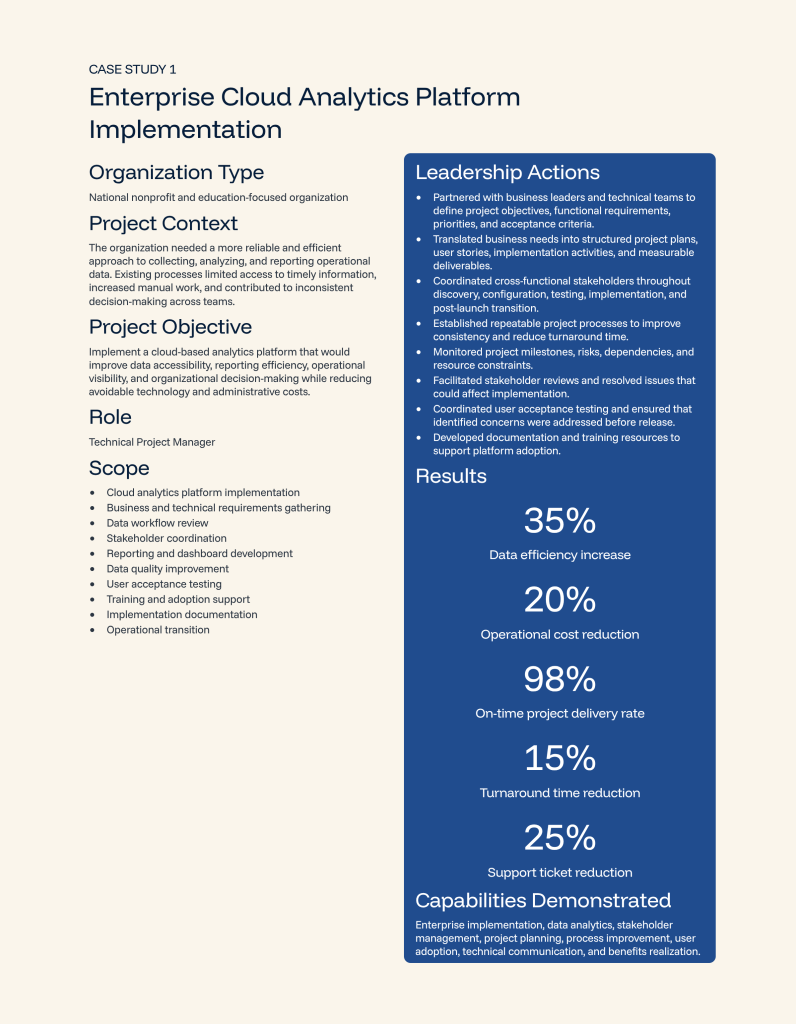
- Increased data efficiency by 35%
- Reduced operational costs by 20%
- Achieved a 98% on-time project delivery rate
- Reduced project turnaround time by 15%
- Reduced support tickets by approximately 25%
- Improved organizational access to timely and actionable information
Capabilities Demonstrated
Enterprise implementation, data analytics, stakeholder management, project planning, process improvement, user adoption, technical communication, and benefits realization.